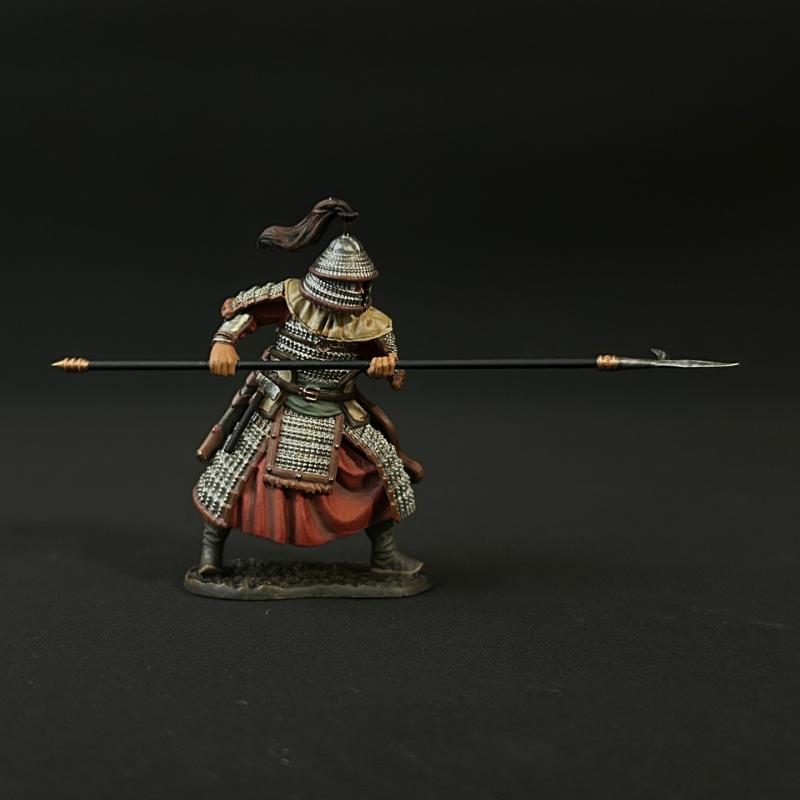
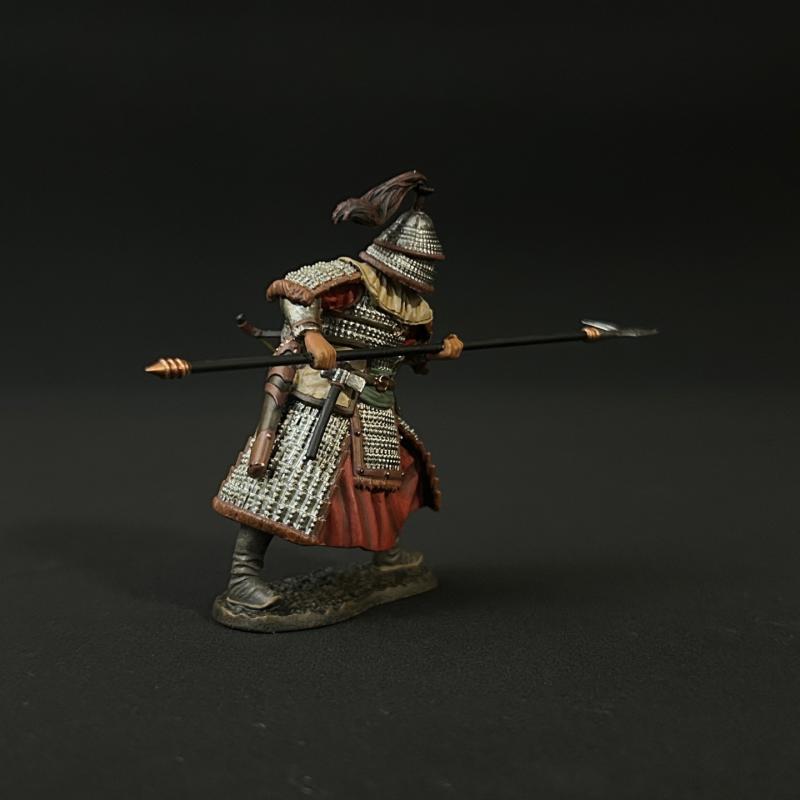
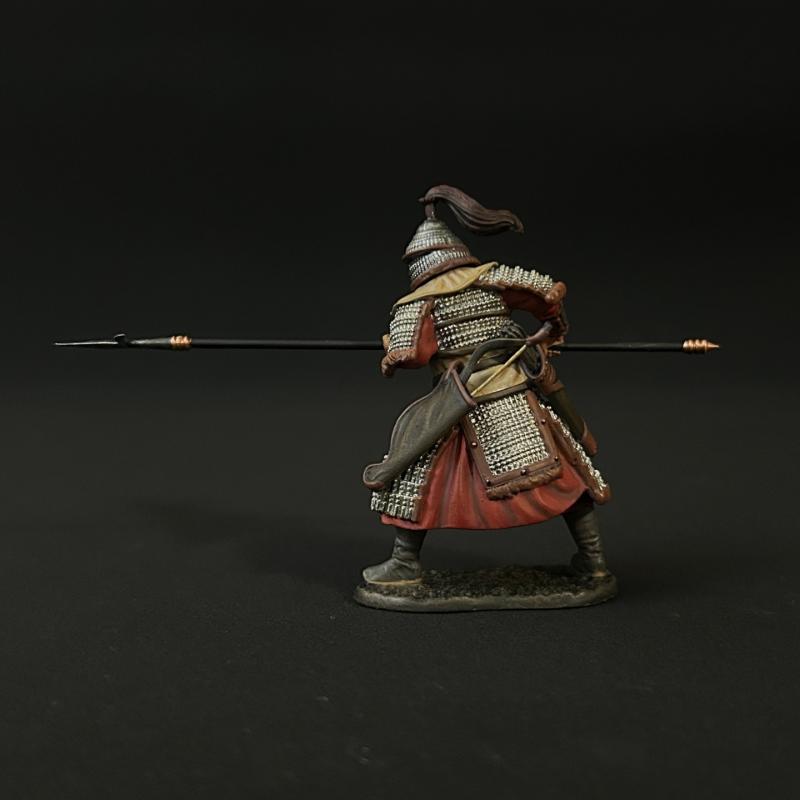
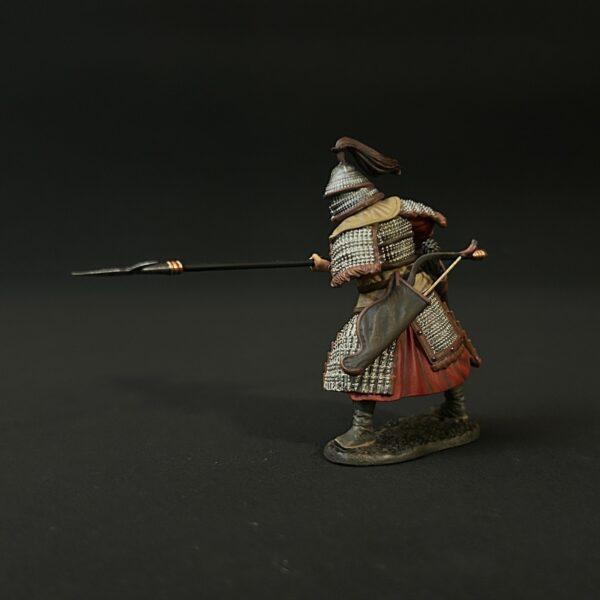
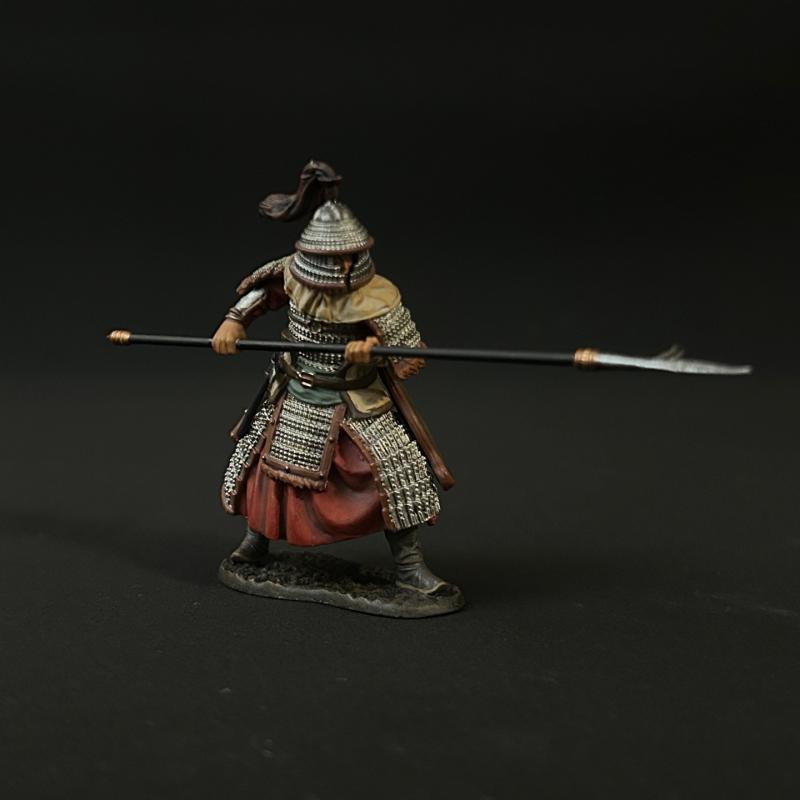
Song Dynasty Heavy-armored Hooked-spear Infantry, Mount & Blade--single Ancient Chinese figure thrusting spear
$54.95
Future Release
Add to Wish List Notify Me When Available
Item Number: MB001
Song Dynasty Heavy-armored Hooked-spear Infantry, Mount & Blade--single Ancient Chinese figure thrusting spear
When Farmers Fought Steppe Cavalry
For centuries, China was a settled farming society. Its wealth came from fields, cities, and trade—not from horses. Again and again, nomadic cavalry from the northern steppes raided and invaded. Their strength was speed, mobility, and the shock of armored horsemen charging in waves.
The Song dynasty, lacking enough horses, had to find another answer: disciplined infantry. Yue Fei’s elite Beiwei Army became famous for this. Its heavy infantry were trained to stand firm against Jin cavalry, even heavily armored riders. Their brutal tactic was simple: do not fight the rider—fight the horse. Soldiers with long blades and axes cut at horses’ legs, breaking the charge, while other troops held formation and counterattacked.
At battles such as Yancheng in 1140, this “infantry against cavalry” approach helped Song troops defeat elite Jin horsemen. The Beiwei Army became a symbol of how a farming empire, though weaker in cavalry, could use discipline, armor, and anti-cavalry tactics to survive against steppe warriors.
When Farmers Learned to Shoot Back
For centuries, settled China fought steppe cavalry on the defensive. The answer was never more horses—it was better organization and better weapons.
In the early 1400s, the Ming emperor Yongle created the Shenjiying—the “Divine Engine Battalion,” a standing unit trained specifically around firearms. It was one of the first military formations anywhere built around gunpowder weapons as a core capability, not a novelty.
Against Mongol and Oirat cavalry, the pattern was consistent: let the horsemen commit, then hit them with massed fire. At Orlan Oshwin in the early 1400s, Shenjiying guns and cannons shattered a cavalry charge before it reached the Ming lines. In 1449, during the defense of Beijing, hidden Shenjiying gunners ambushed Mongol riders outside Desheng Gate, breaking the assault.
By the 1500s, a new ingredient arrived: Portuguese breech-loading swivel guns, captured in coastal clashes and soon reverse-engineered by the Ming as the folangji cannon. These gave Chinese infantry more mobile, faster-firing artillery—another tool for the same old problem.
Due to be released in NOVEMBER 2026.
